HAAK

A crochet hook built like a tool, and the brand around it

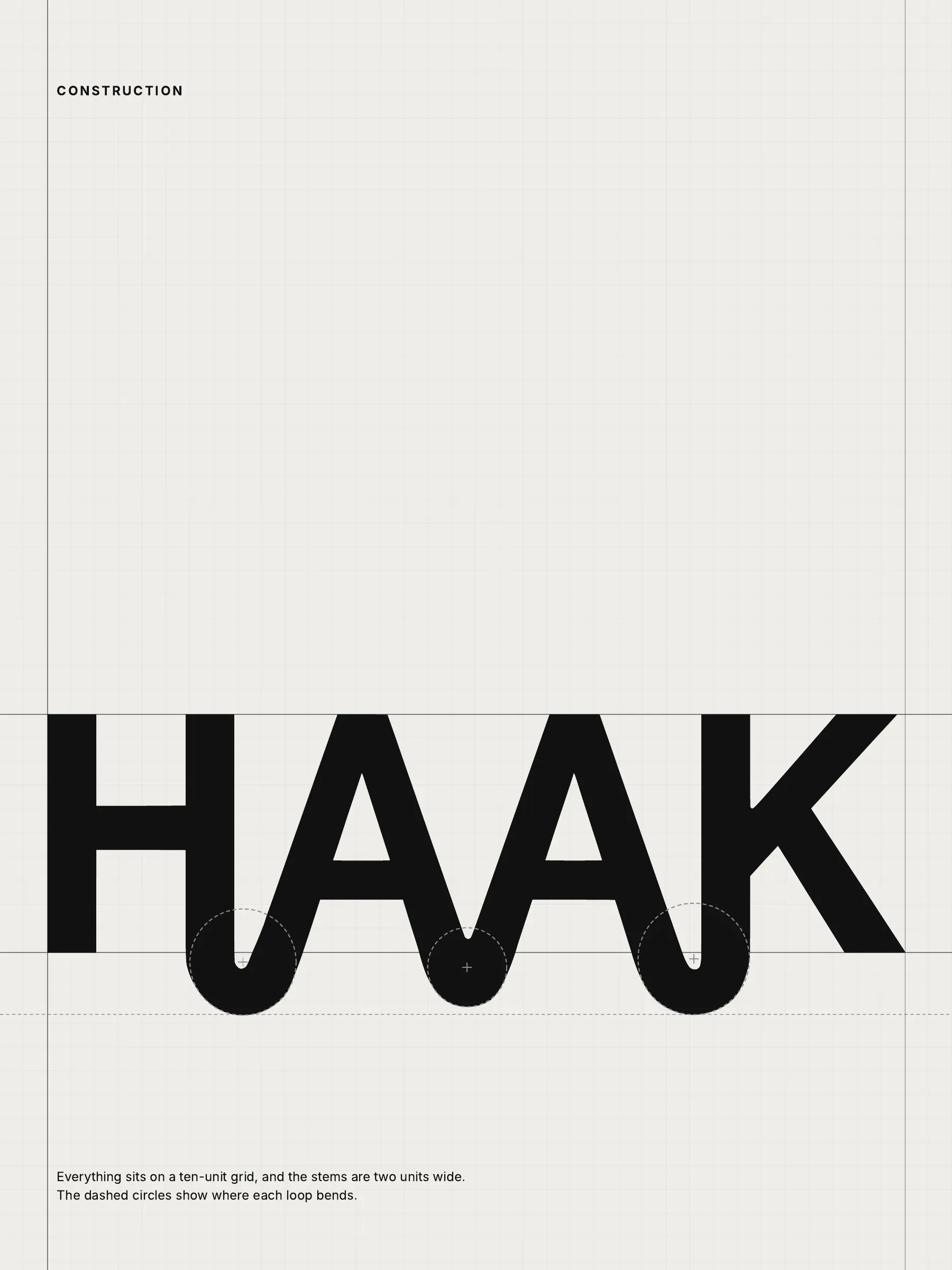
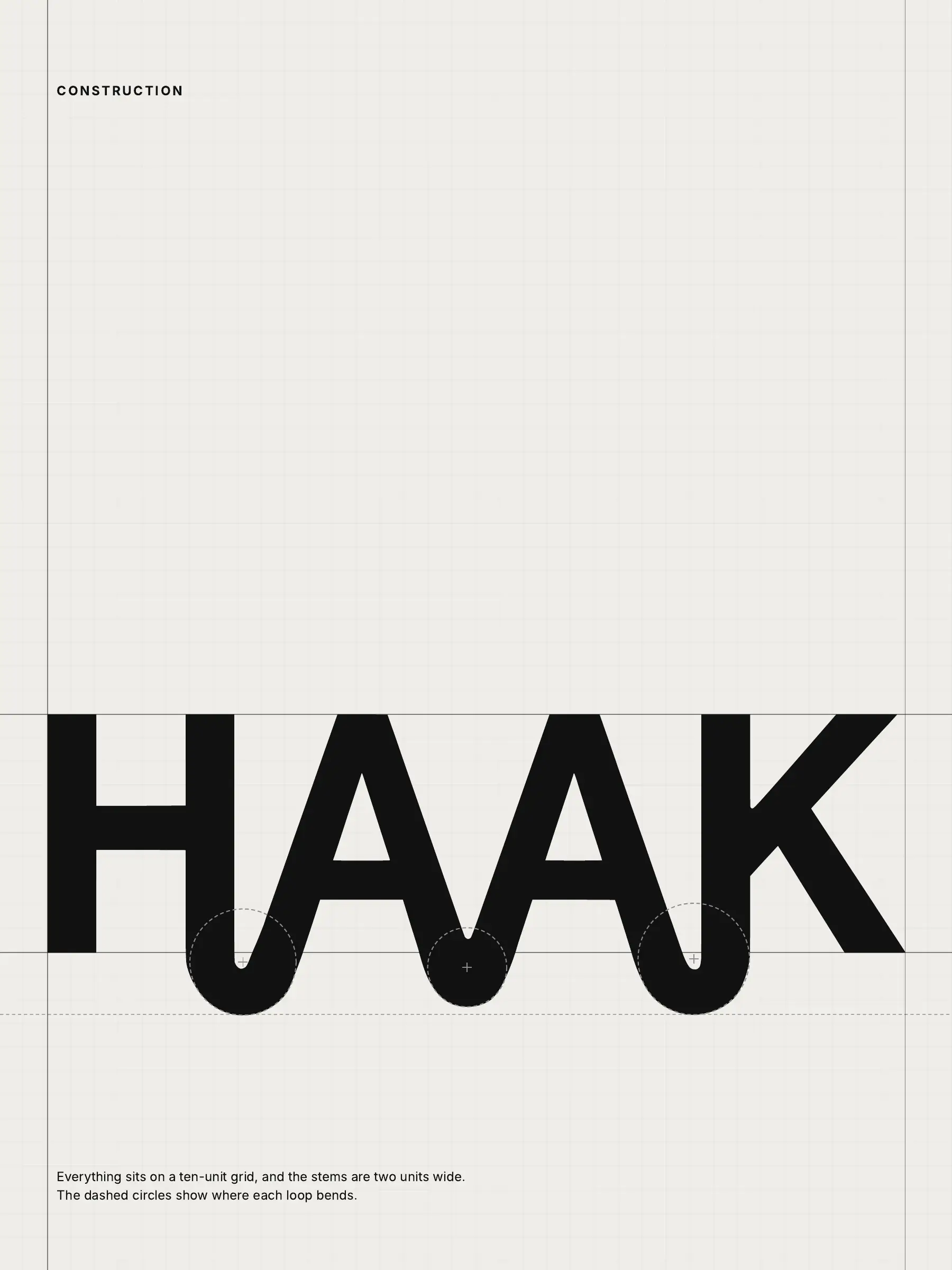
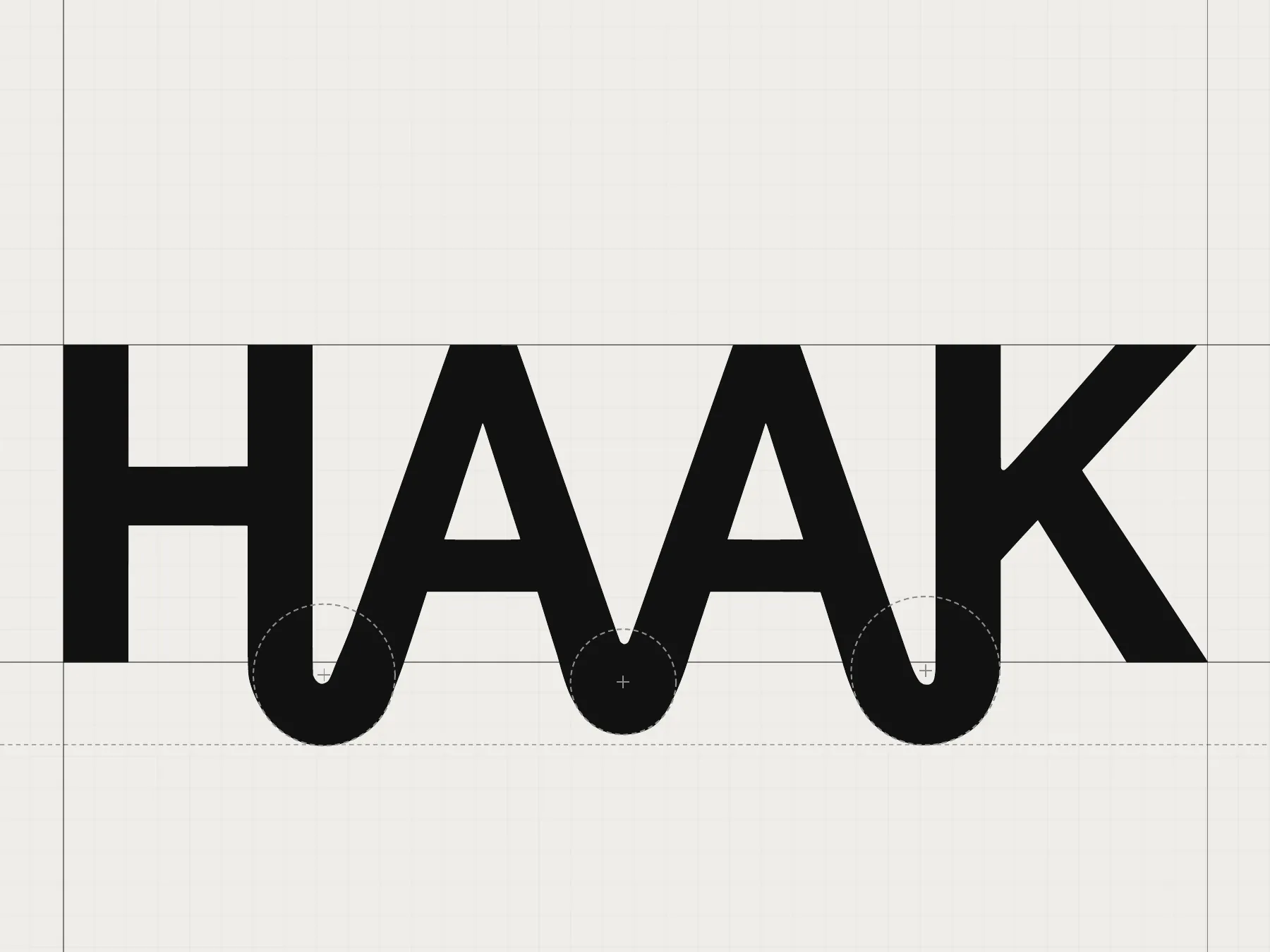
The HAAK wordmark on its construction grid: black capitals with a loop under each joint, and dashed circles where each loop bends

One object

I started with one object: a 4.5 mm hook, cut from 316L steel, twisted once and polished by hand. It clips to a carabiner, so it lives on a belt loop or a bag strap instead of a drawer. Everything else grows from one line: hard goods for soft work.

The reference

On a building site, rebar is tied together with a hooked tool and a twist of wire. In filet crochet, thread is pulled through with a hooked tool, one square at a time. Both build a grid by hand. So why does one tool look like it belongs on a site, and the other in a sewing kit?

The wordmark

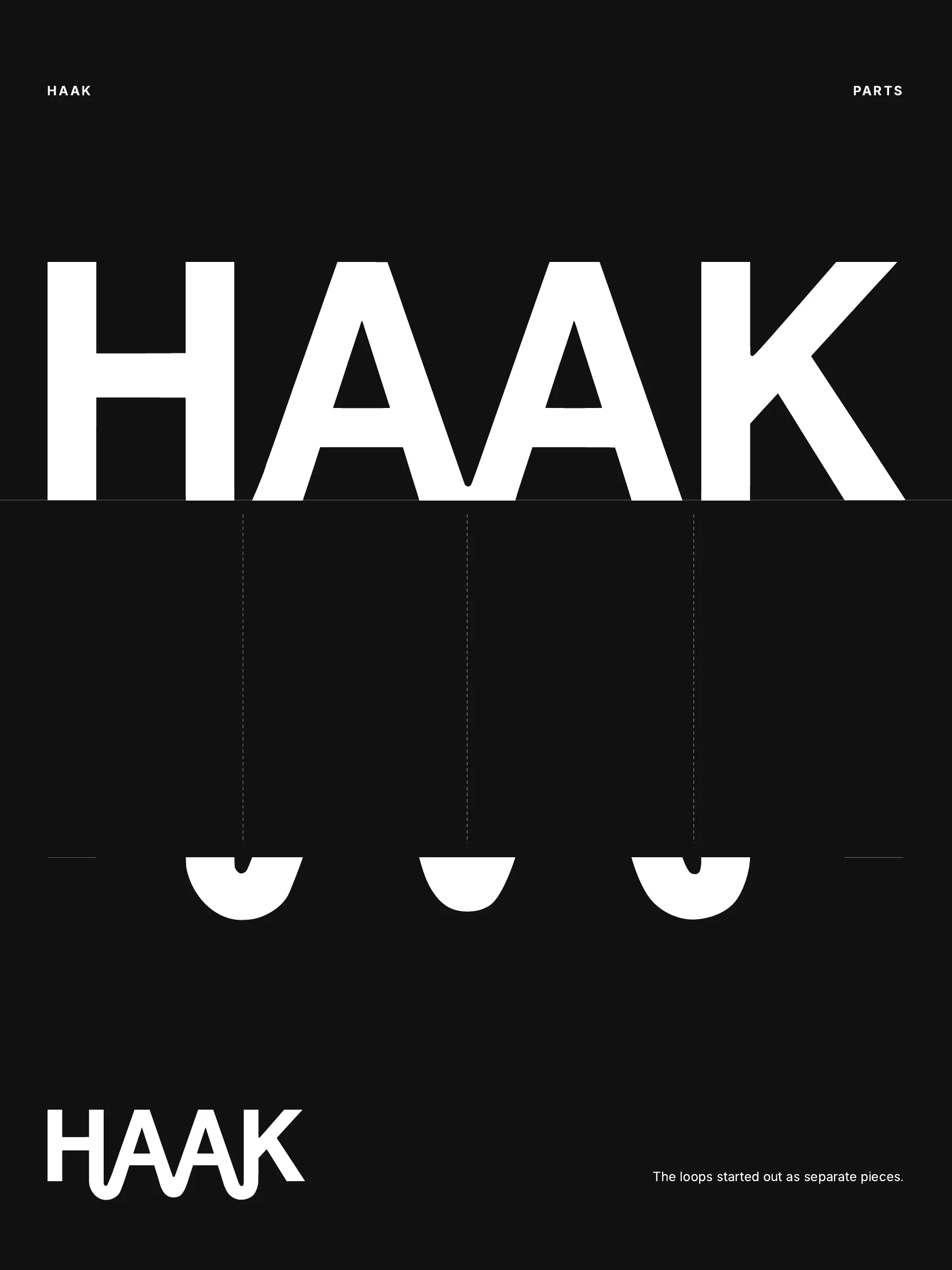
If the hook is a tool, the brand should talk like one. I built the identity from workwear and tool brands: black, white and a single rust color, set in Helvetica Neue. I drew a custom wordmark whose A’s loop like chain, the steel kind or the stitch every crochet project starts with.
Black poster titled Parts: the HAAK wordmark split from its three loops, which hang below as separate white pieces, with the joined wordmark at the bottom
Cream construction poster: the HAAK wordmark on a ten-unit grid, with dashed circles where each loop bends
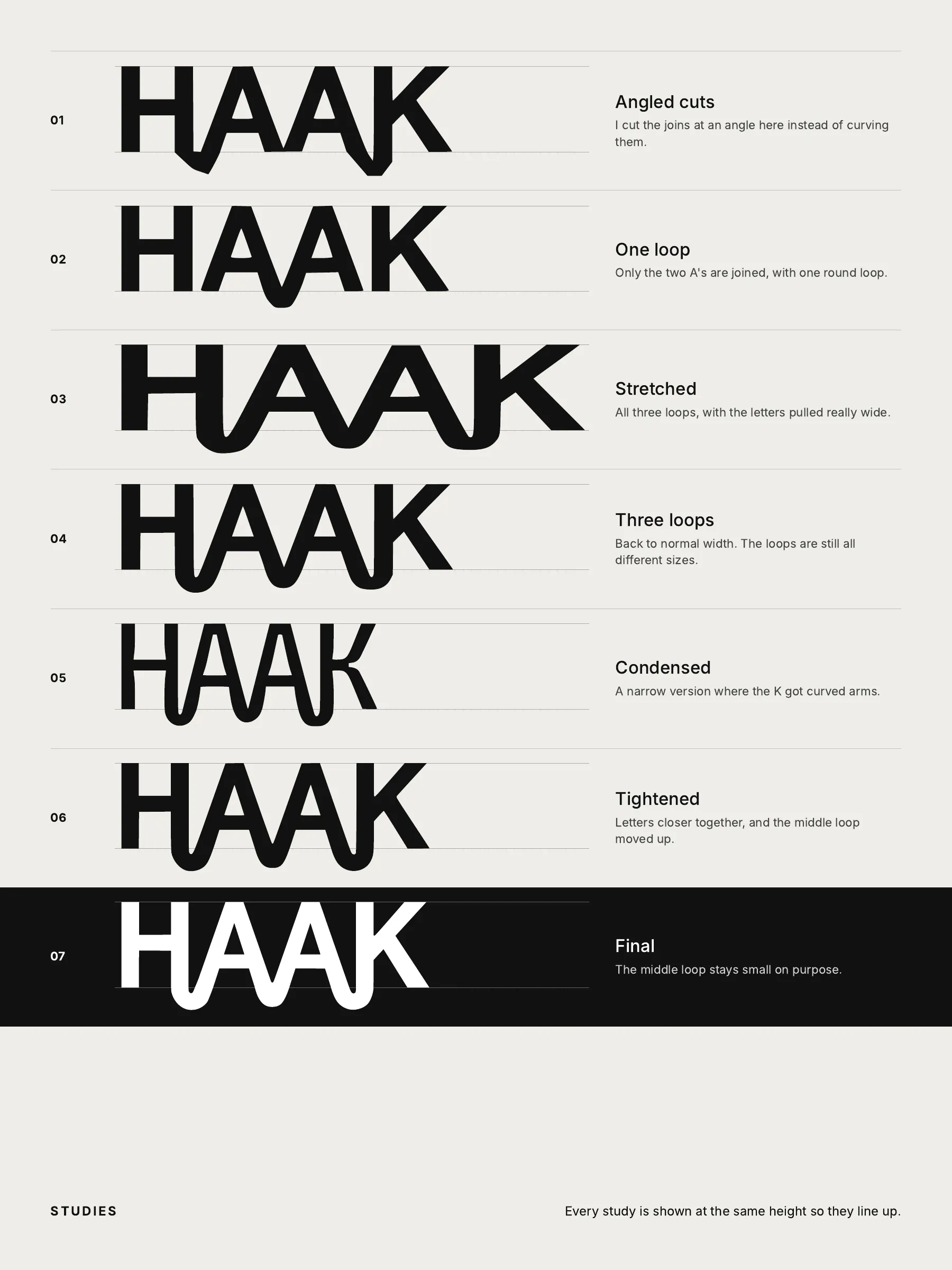
Studies poster: seven versions of the HAAK wordmark stacked at the same height, from angled cuts to the final, each with a short note
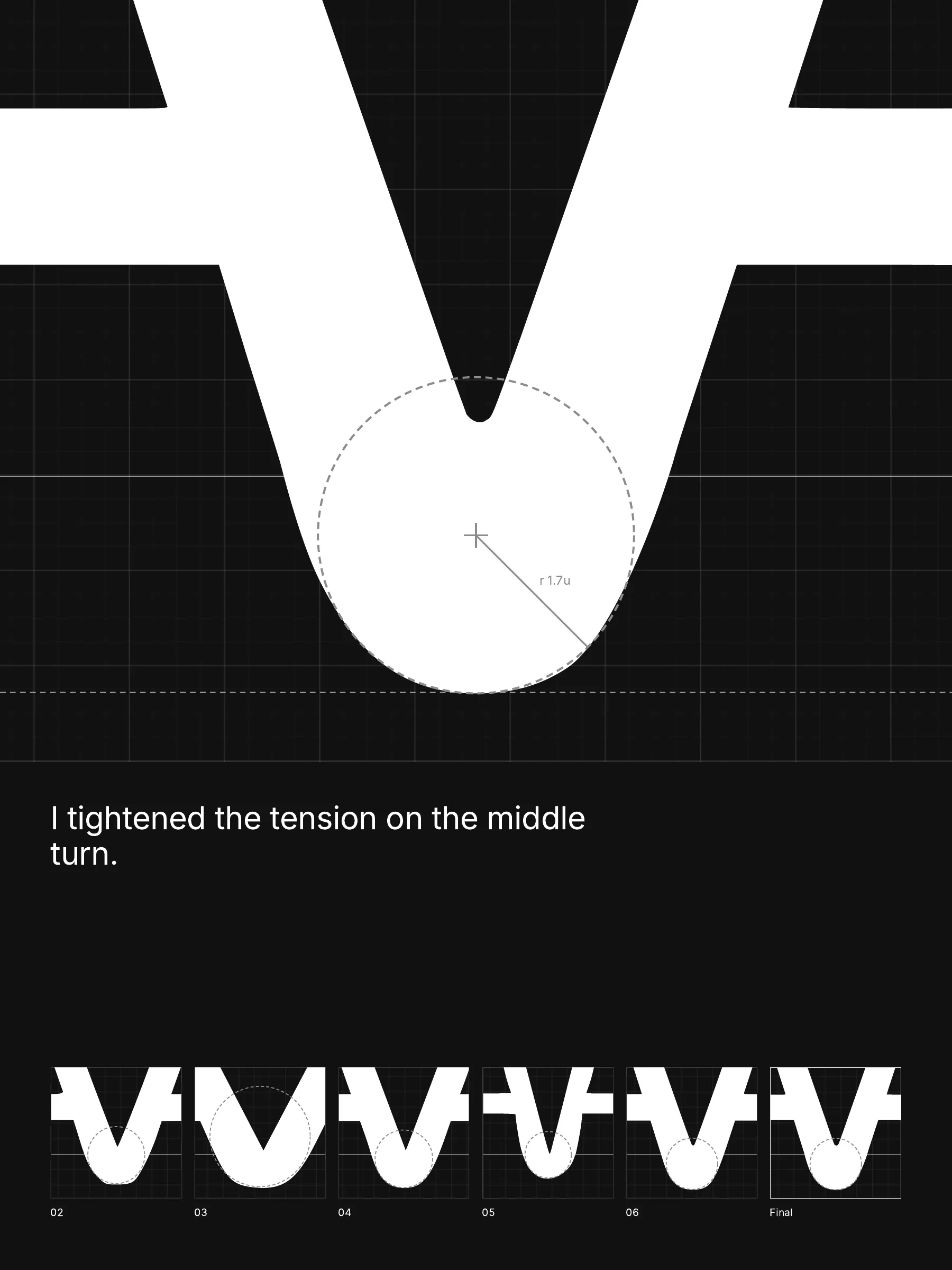
Black poster with a close-up of one loop and the dashed circle it bends around, the line I tightened the tension on the middle turn, and six versions of the loop along the bottom
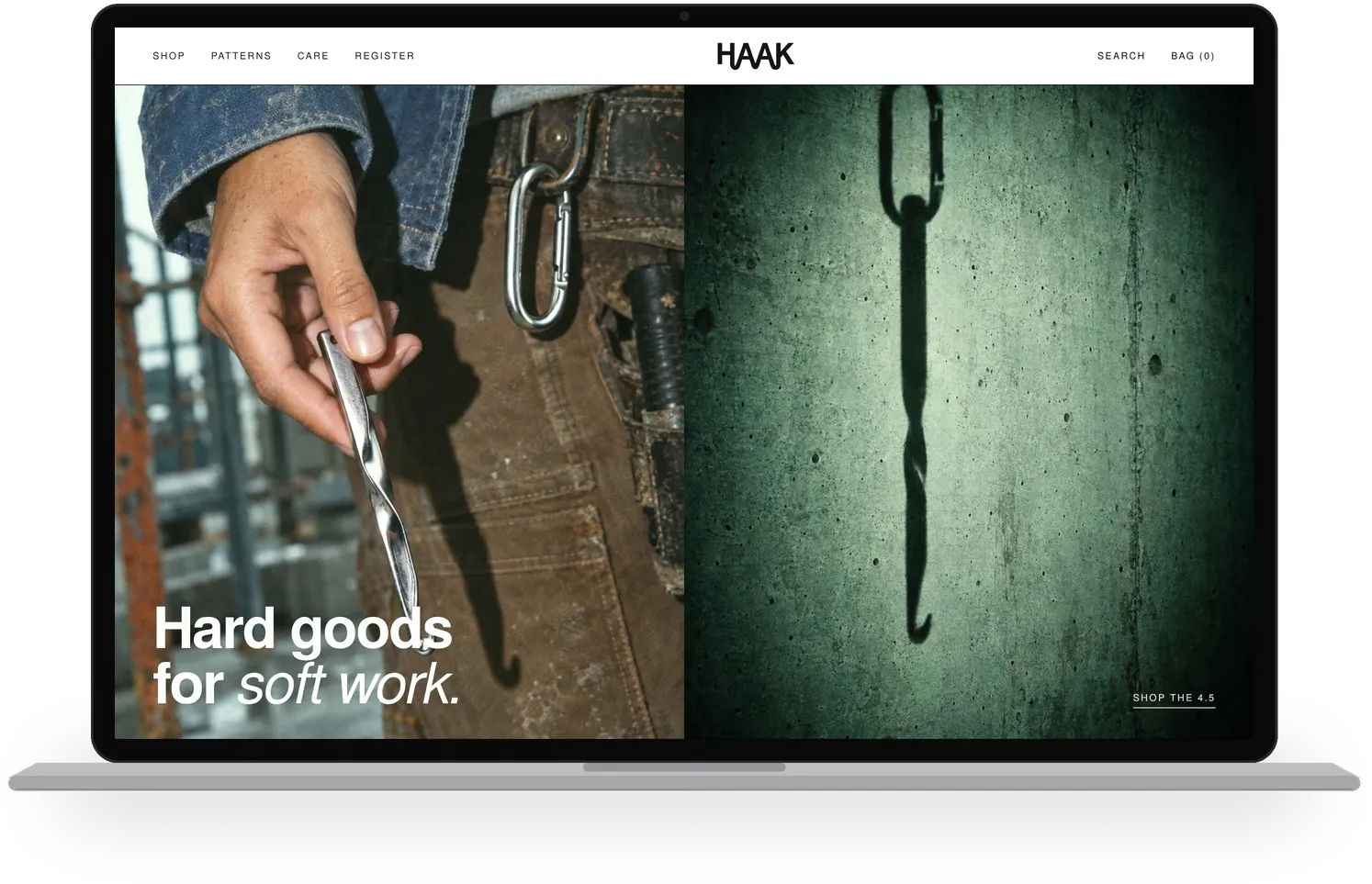
HAAK product site scrolling on a laptop: Hard goods for soft work with the hook's shadow on concrete, the hook on the belt, the bag and at home, the HAAK 4.5 spec sheet, Wear is not a defect over filet on rebar, and the footer
Product site
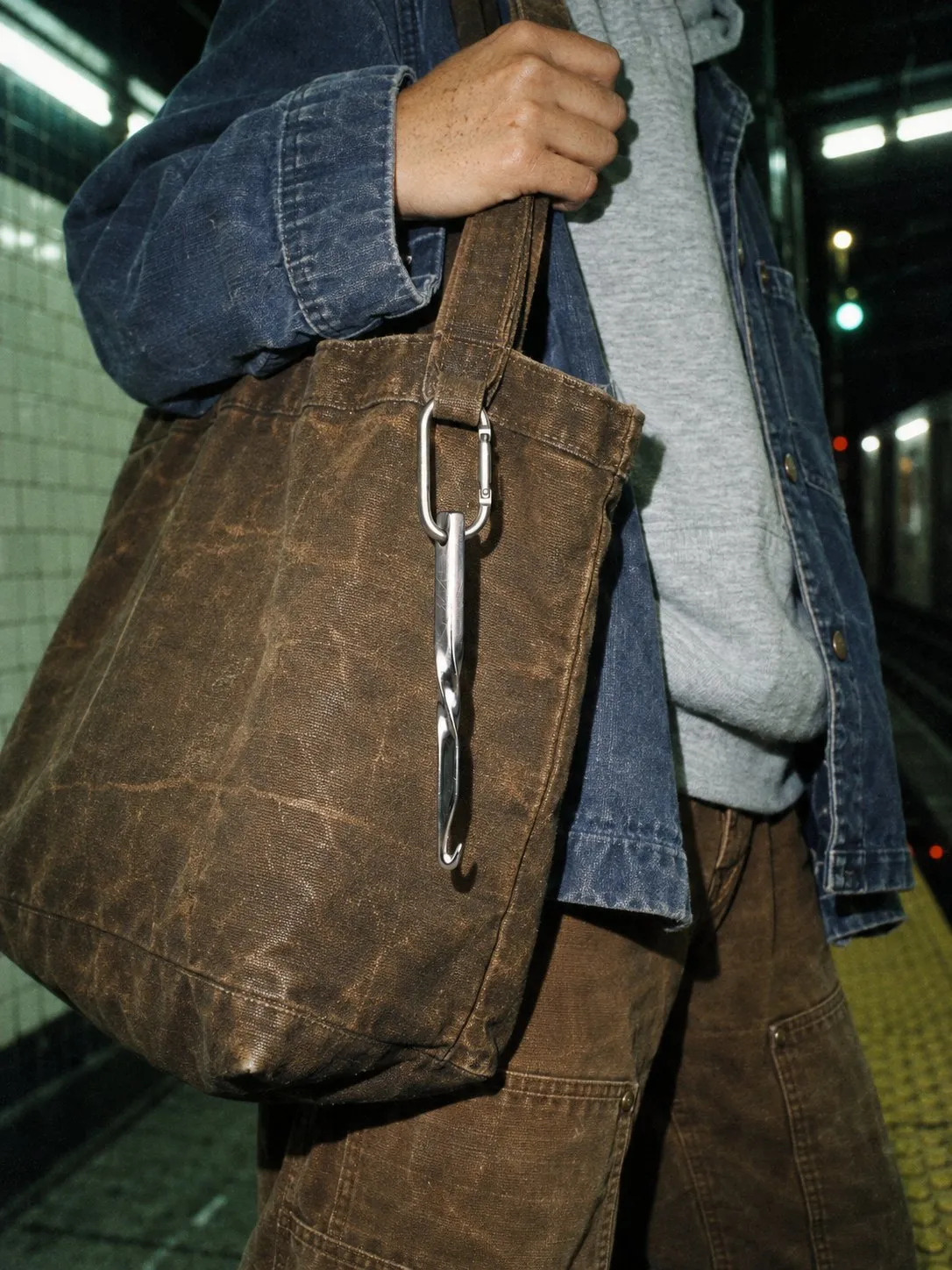
Waxed canvas tote with a HAAK hook clipped to the strap by a carabiner